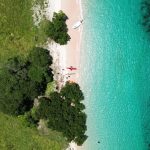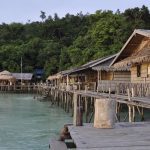
Flores doesn’t get the headlines it deserves. Most visitors fly into Labuan Bajo, board a boat to watch Komodo Dragons, and leave. Birders know better. Spend two weeks crossing this island from west to east — from the mangroves of the coast to the volcanic crater lakes of Kelimutu — and you’re looking at more than 300 recorded species, a concentration of Lesser Sundas endemics found nowhere else on Earth, and landscape after landscape that feels genuinely unexplored.
We’ve been running trips across this island for years. This is what we know.
Why Flores Matters for Birders
Flores sits in the heart of Wallacea — the biogeographic transition zone between the Asian and Australasian faunal regions, named after British naturalist Alfred Russel Wallace, who passed through these islands in the 1850s. The island’s long geological isolation drove the evolution of species that exist nowhere else. The Flores Crow, Flores Monarch, Flores Green Pigeon, Flores Hawk-Eagle, Flores Scops Owl, Flores Minivet, Flores Leaf Warbler, Bare-throated Whistler, Russet-capped Tesia, Thick-billed Dark-eye, and Flame-breasted Sunbird are all restricted to this island or a tiny cluster of neighbouring Lesser Sundas islands.
That’s an extraordinary concentration of range-restricted species in a single island roughly 350 km long. By comparison, Bali — which draws far more birding visitors — has a fraction of Flores’ endemic count.
The island is volcanic, dramatic, and vertically diverse. Within a day’s drive from Labuan Bajo you move from coastal mangroves and dry scrub through degraded lowland forest, up into montane hill forest, and onto the volcanic slopes of peaks like Poco Ranaka at over 2,300 metres. Each habitat shift produces a different set of birds. There is no single best site on Flores. The whole island is the site.
The West Flores Circuit: Labuan Bajo as Your Base
Dolat Wetlands
Just four kilometres south of town along the coastal road, the Dolat Wetlands are productive year-round and spectacular toward the end of the wet season. Wandering Whistling-Duck, Sunda Teal, Javan Plover, Malaysian Plover, and Beach Thick-knee work the margins. Mees’s Nightjar calls from the scrub at dusk. Stork-billed, Cerulean, and Common Kingfishers patrol the mangrove-dominated channels. Black-faced Munia and Timor Zebra Finch flock through the open areas.
Labuan Bajo Coast and Mangroves
The bays around Labuan Bajo hold the standard coastal suite for this part of Indonesia: White-collared Kingfisher, Javan Pond Heron, egrets, and shorebirds at low tide. The scrubby hills behind town hold Elegant Pitta and Moluccan Scops Owl if you’re out at the right time. This is warm-up birding — it gets your eye in before the forest work begins.
Potawangka Road
About ten kilometres east of Labuan Bajo on the Trans-Flores Highway, a left turn toward Terang opens into the first serious forest birding of any west Flores circuit. The forest edge and clearings here are reliably productive for Bonelli’s Eagle, Wallacean Cuckooshrike, White-rumped Kingfisher, Flame-breasted Sunbird, and Flores Green Pigeon. Wallace’s Hanging-Parrot moves through flowering trees. Elegant Pitta hides in the undergrowth. Orange-footed Scrubfowl and Green Junglefowl scratch through the leaf litter. Zebra Finch appears in the open patches. Get here at first light.
Mbeliling Forest
In the hills inland from Labuan Bajo, Mbeliling Forest is where the concentration of Flores forest endemics begins in earnest. Flores Monarch, Flores Crow, Flores Hawk-Eagle, Flores Green Pigeon, Wallace’s Hanging-Parrot, and Flores Minivet are all reliable here. The forest is denser and wetter than the lowland patches, with more moss on the branches and a richer understorey. Thick-billed Dark-eye moves through the canopy in small flocks. Typically a full-day trip from Labuan Bajo by vehicle and trail.
Lake Sano Nggoang and Nunang Village
This crater lake (around 500 hectares, approximately 650 metres elevation) is one of the most rewarding stops on the entire west Flores circuit. The NGO Burung Indonesia has been active here; a hunting and trapping ban is well enforced, and the birds are noticeably more confiding than at most other Flores sites. Pacific Black Duck sits on the lake. Wallace’s, Moluccan, and Flores Scops-Owls call at night — this is one of the best sites in Indonesia for encountering all three owl species in a single evening. Glittering Kingfisher, Elegant Pitta, Flores Minivet, Flores Crow, and Chestnut-capped Thrush are regular. Basic homestays accommodate up to twenty beds across the village. For owl sessions, staying overnight is the right call.
Puarlolo
Look for the birdwatching signs and the telecommunications tower visible from the road — that’s the marker for Puarlolo, the strongest site in west Flores for Flores Monarch. This species has one of the most restricted ranges of any bird in the Lesser Sundas. Trails leave from the clearing in front of the tower. Look for Flores Monarchs in the lower to middle storey — unobtrusive birds that reward patience with surprisingly good views. Also possible: Flores Hawk-Eagle, Wallace’s Hanging-Parrot, Rufous-backed Dwarf-Kingfisher, Russet-capped Tesia, Crested Heleia, Thick-billed Heleia, and both Chestnut-capped and Chestnut-backed Thrushes.
Ruteng: The Highland Hub
The central highland town of Ruteng, four to five hours east of Labuan Bajo, is the most strategically important base for Flores birding. Within an hour of town in multiple directions lie four distinct sites, each producing a slightly different cut of the island’s sub-montane and montane avifauna. If you can only base yourself in one place on Flores, base yourself here.
Danau Rana Mese (Ranamese Lake)
Twenty kilometres east of Ruteng on the Bajawa road, this small forested crater lake is the finest general birding site in central Flores. The lake holds Pacific Black Duck and Little Grebe. In the surrounding closed-canopy forest: Bare-throated Whistler (extraordinary voice — a penetrating whistle that carries far through the forest); Flores Leaf Warbler; Wallace’s and Flores Scops-Owl; Black-backed Fruit Dove; Glittering Kingfisher; Pale-shouldered Cicadabird; Flores Minivet; Trumpeting Fantail; Russet-capped Tesia; Eyebrowed, Crested, and Thick-billed Heleias; Helmeted Friarbird; Scaly-crowned Honeyeater; and Five-coloured Munia. Allow a full day.
Golo Lusang Pass
Eight kilometres south of Ruteng, the road reaches an obvious pass before dropping steeply through degraded forest in a series of hairpin bends. Start at the pass at first light and walk downhill. The dawn chorus of Bare-throated Whistlers here is genuinely memorable. Additional species include Flores Shortwing (White-browed Shortwing) and Tawny-breasted Parrotfinch.
Poco Ranaka
An access road climbs south to the summit of Mount Ranaka at 2,300 metres. Motorbike is the practical option. The reward is a distinct higher-elevation bird set: Pygmy Cupwing (Pygmy Wren-babbler), White-browed Shortwing, Tawny-breasted Parrotfinch, Chestnut-backed Thrush, Dark-backed Imperial Pigeon, Black-backed Fruit Dove, and Bonelli’s Eagle overhead.
Pagal Forest
Twenty kilometres north of Ruteng, the degraded roadside forest patches around Pagal are productive for edge-forest species. Flores Hawk-Eagle hunts the woodland margins. Wallace’s Hanging-Parrot and Flores Green Pigeon work the canopy. Elegant Pitta calls from the undergrowth. Brown-capped Fantail and Russet-capped Tesia keep low. Good early-morning birding before road traffic builds.
Kisol: The Lowland Classic
Two to three hours south-east of Ruteng, Kisol village anchors a cluster of lowland and hill forest remnants that represent the finest lowland birding on Flores. This is the most reliable site for Flores Crow — one of the world’s rarest corvids, restricted to a few isolated forest patches on Flores — and holds the broadest single-site list of Flores endemics anywhere on the island.
Two routes from the village cover the main forest. The road south toward Nangarawa enters excellent forest after a few kilometres: Orange-footed Scrubfowl, Flores Hawk-Eagle, Moluccan and Wallace’s Scops-Owls, Black-naped Fruit Dove, Mees’s Nightjar, Elegant Pitta, and Flores Crow are regularly encountered. The slopes of Gunung Pacandeki to the south-west offer viewpoints where Flores Hawk-Eagle can be scoped.
Bajawa, Inerie, and the Ngada Highlands
The highlands around Bajawa and the active volcano Mount Inerie open up the central-east Flores highlands. Bare-throated Whistler and Flores Leaf Warbler are strong here. Five-coloured Munia — a striking finch of open highland areas — appears in the grassland edges around Bajawa town. This region is less visited by specialist birders than the Ruteng circuit, which means lower trampling pressure and more confiding birds.
Kelimutu National Park: Montane Birding at the Crater Lakes
The famous tri-coloured crater lakes of Kelimutu attract thousands of sunrise visitors. Most are back in their vehicles and heading downhill by 8am. That’s when the birding gets good. Walking back along the forest trail from the summit: Bare-throated Whistler is more numerous here than anywhere else on the island (the national park boundary reduces hunting pressure); Dark-backed Imperial Pigeon is consistently present; Flores Green Pigeon moves through fruiting trees; Crested Dark-eye and Ruddy Cuckoo Dove work the understorey. Five-coloured Munia appears in the scrub above Moni village.
Komodo National Park: The Dry Forest Extension
Komodo National Park is accessed by boat from Labuan Bajo and almost always combined with a Flores birding circuit. The park’s dry forest and savanna — dominated by lontar palms and Eucalyptus — are a genuinely different habitat from anything on mainland Flores. Bird from the forested valleys around Loh Liang on Komodo Island and equivalent sites on Rinca.
- Orange-footed Scrubfowl — scratches through leaf litter at dawn
- Green Junglefowl — common here; runs across the tracks
- White-bellied Sea Eagle and Brahminy Kite — patrol overhead
- Collared Kingfisher — calls from the mangrove fringe
- Great-billed Parrot — moves through the canopy
- Sumba Cicadabird — easier here in dry forest than most Flores habitats
- Blue-tailed Bee-eater — works the open edges
Flores and Komodo: Key Birding Sites at a Glance
| Location | Base Town | Primary Habitat | Top Target Species |
|---|---|---|---|
| Dolat Wetlands | Labuan Bajo | Wetlands, mangroves | Wandering Whistling-Duck, Sunda Teal, Malaysian Plover, Mees’s Nightjar, Stork-billed Kingfisher |
| Labuan Bajo Coast | Labuan Bajo | Mangroves, tidal flats | White-collared Kingfisher, Javan Pond Heron, Beach Thick-knee |
| Mbeliling Forest | Labuan Bajo | Hill rainforest | Flores Monarch, Flores Crow, Flores Hawk-Eagle, Flores Green Pigeon, Flores Minivet |
| Potawangka Road | Labuan Bajo | Dry forest, farmland edge | Bonelli’s Eagle, White-rumped Kingfisher, Flame-breasted Sunbird, Elegant Pitta, Zebra Finch |
| Lake Sano Nggoang & Nunang | Labuan Bajo / Ruteng | Crater lake, forest | 3 scops-owl species, Glittering Kingfisher, Flores Crow, Flores Minivet |
| Puarlolo Forest | Labuan Bajo / Ruteng | Lowland & foothill forest | Flores Monarch (stronghold), Flores Hawk-Eagle, Russet-capped Tesia |
| Danau Rana Mese | Ruteng | Montane lake, forest | Bare-throated Whistler, Flores Leaf Warbler, Pacific Black Duck, Wallace’s Scops-Owl |
| Golo Lusang Pass | Ruteng | Montane forest | Flores Minivet, Flores Shortwing, Tawny-breasted Parrotfinch, Bare-throated Whistler |
| Poco Ranaka | Ruteng | Upper montane forest | Pygmy Cupwing, White-browed Shortwing, Chestnut-backed Thrush, Bonelli’s Eagle |
| Pagal Forest | Ruteng | Degraded lowland forest | Flores Hawk-Eagle, Elegant Pitta, Wallace’s Hanging-Parrot, Brown-capped Fantail |
| Kisol Village Forest | SE of Ruteng | Lowland rainforest | Flores Crow (stronghold), Flores Monarch, Flores Hawk-Eagle, Mees’s Nightjar |
| Bajawa / Inerie / Ngada | Bajawa | Montane forest, farmland | Bare-throated Whistler, Flores Leaf Warbler, Five-coloured Munia, Green Junglefowl |
| Kelimutu National Park | Moni / Ende | Upper montane forest | Bare-throated Whistler, Dark-backed Imperial Pigeon, Crested Dark-eye, Five-coloured Munia |
| Komodo NP (Komodo, Rinca) | Labuan Bajo (boat) | Dry forest, savanna, coast | Orange-footed Scrubfowl, Sumba Cicadabird, Great-billed Parrot, White-bellied Sea Eagle |
The Flores Endemic Checklist
The Big Six — Highest Priority Targets
- Flores Hawk-Eagle
- Flores Scops Owl
- Flores Crow
- Flores Monarch
- Flores Green Pigeon
- Flores Minivet
Supporting Cast — Flores and Lesser Sundas Specialties
- Bare-throated Whistler
- Flores Leaf Warbler
- Russet-capped Tesia
- Flores (White-browed) Shortwing
- Thick-billed Dark-eye (Heleia)
- Crested Dark-eye (Heleia)
- Golden-rumped Flowerpecker
- Black-fronted Flowerpecker
- Flores (Blood-breasted) Flowerpecker
- White-rumped Kingfisher
- Glittering Kingfisher
- Trumpeting (Brown-capped) Fantail
- Flores Warbling-Flycatcher
- Five-coloured Munia
- Tawny-breasted Parrotfinch
- Pale-shouldered Cicadabird
The Owls — Require Dedicated Night Sessions
- Flores Scops Owl
- Wallace’s Scops Owl
- Moluccan Scops Owl
- Mees’s Nightjar
When to Go Birding on Flores
The dry season — April through October — gives the best conditions across all habitats. Roads are accessible, forest trails are passable, and resident birds are at their most vocal. The peak wet season (December to March) brings heavy rain that makes highland access difficult. If your circuit includes Komodo, note that July and August are high tourist season for the park — expect more boat traffic, though this rarely affects actual birding. We recommend a minimum of ten days for a serious Flores circuit; two weeks is more comfortable.
What Makes the Difference on Flores
We know which Flores Crow territory has been stable across seasons, which section of the Kisol road floods after rain, when the Bare-throated Whistlers start their dawn chorus at Golo Lusang. That kind of knowledge isn’t in a trip report — it comes from time on the ground and relationships with the local communities who live inside the birding areas.
Flores is not an easy island to navigate independently. The Trans-Flores Highway is a long drive with few waypoints. Road conditions after rain can close sections entirely. The homestay network around sites like Sano Nggoang works on local trust and coordination. Getting good owl sessions at Kisol means knowing who to ask and when to go. The guides who take you into the forest at Kisol are from Kisol. The family who hosts you at Nunang lives on the lake. That local intelligence is what makes the difference between a good list and an exceptional one.
Frequently Asked Questions — Flores Birding
How many endemic bird species does Flores have?
Flores has over 20 endemic and near-endemic species, including Flores Crow, Flores Monarch, Flores Hawk-Eagle, Flores Green Pigeon, Flores Scops Owl, Flores Minivet, Bare-throated Whistler, Flores Leaf Warbler, and Russet-capped Tesia. The total recorded species list exceeds 300.
What is the best time to go birding on Flores?
The dry season from April to October gives the best birding conditions — roads are accessible, forest trails are passable, and resident birds are most vocal. The wet season peak (December to March) brings heavy rain and can make highland access difficult.
Where is the best site for Flores Crow?
Kisol village forest, southeast of Ruteng, is the most reliable site for Flores Crow — one of the world’s rarest corvids. Lake Sano Nggoang and Mbeliling Forest are also strong sites for this species.
Can Flores birding be combined with Komodo National Park?
Yes. Komodo National Park is accessed by boat from Labuan Bajo, the western gateway to Flores. Most Flores birding circuits begin or end in Labuan Bajo and can easily incorporate one or two days in Komodo for its distinct dry forest bird suite — Orange-footed Scrubfowl, Sumba Cicadabird, and Great-billed Parrot are key targets.
How long does a complete Flores birding circuit take?
A minimum of 10 days covers the core circuit from Labuan Bajo through Ruteng to Kisol and Kelimutu. Two weeks is more comfortable and allows full coverage of the Ruteng cluster (Rana Mese, Golo Lusang, Poco Ranaka, Pagal) plus Komodo.