Community-based tourism in Indonesia is one of the most discussed concepts in responsible travel and one of the least honestly described. Every operator with a sustainability page talks about community benefit. Fewer of them talk about what it actually takes to create the conditions where that benefit is possible: the infrastructure gaps, the hosting skills that don’t yet exist, the safety considerations in genuinely remote terrain, and the long, unglamorous work of building from nothing. This article is about that work… what it looks like on the ground in remote Indonesia, why it matters, and why getting it right requires the same operational discipline as any serious adventure travel program.
What “Community-Based Tourism” Actually Requires
The academic literature on community-based tourism is by now substantial. Ishak (2024), in a grounded study of tourism village development in Indonesia, identifies the core challenge clearly: the problem is not that communities lack culture or landscape worth experiencing, it is that they often lack the capacity to convert those assets into sustainable tourism income. The barriers she documents include limited entrepreneurial knowledge, inadequate infrastructure, restricted access to capital, and weak links to the wider tourism economy. These are real barriers. They are also, in our experience operating across the Indonesian archipelago, often the second or third problem on the list…because before you reach product innovation or digital marketing, you frequently need to address more fundamental questions. Does the guesthouse have working water? Can the host family communicate with guests whose first language isn’t Bahasa Indonesia? Is there a plan if someone needs medical attention? Is there a toilet that a Western traveller can use without significant anxiety? Responsible community-based tourism in Indonesia starts where it actually starts – not where the brochure wants it to start.
Indonesia Is Not One Destination
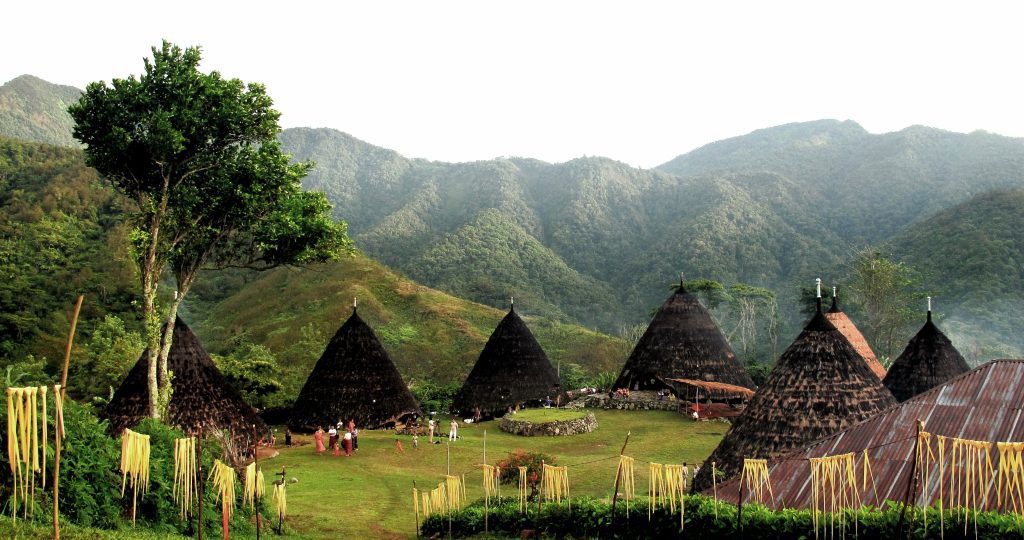
Understanding why capacity building is so complex in Indonesia requires understanding the country’s geographic and developmental reality. Indonesia is the world’s largest archipelago: more than 17,000 islands, 270 million people, and a tourism development landscape that looks completely different depending on where you stand. Bali has a mature, deeply layered tourism industry with established homestay networks, professional guiding associations, training institutions, and decades of accumulated knowledge about managing visitor expectations. Labuan Bajo on Flores has emerged rapidly as a major gateway destination following the government’s “10 New Balis” initiative – bringing investment, infrastructure pressure, and the particular complexity of fast-growth destination development. And then there are the places that sit entirely outside either category: remote highlands in Papua, off-grid coastal communities in Nusa Tenggara Timur, village clusters in interior Sulawesi or Sumbawa that have extraordinary natural and cultural assets, genuine interest in engaging with responsible tourism, and essentially no tourism infrastructure at all. Working across this full spectrum is what distinguishes an Indonesian specialist from an operator who has built itineraries around existing products. We operate in places that don’t have products yet – and our job includes helping create the conditions where those products become possible.
The Ladder: What Capacity Building Looks Like Stage by Stage
Tourism capacity building in remote Indonesia is not one intervention – it is a sequence, and the most common mistake is trying to start at the wrong rung. Here is what that sequence actually looks like in the field.
- Basic Physical Infrastructure Before anything else works, guests need to be able to sleep, eat, and use a bathroom in reasonable comfort. In many of the communities we work with in eastern Indonesia, this requires direct investment. A specific example: in a number of homestay and simple guesthouse settings, the standard bathroom setup is a squat toilet over a basic septic system — functional for local daily use, but not designed for toilet paper or the expectations of long-haul international travellers. Rather than excluding these homestays from itineraries, or delivering uncomfortable surprises to guests, we have found that the practical solution is to purchase and help install Western-style seated toilets. The cost is typically USD 80-150 per installation. The return (in terms of guest comfort, host confidence, repeat bookings, and community income) is many multiples of that. This is not charity. It is direct investment in community tourism infrastructure by an operator with a long-term stake in the destination. It signals partnership rather than extraction. And it is precisely the kind of practical, unglamorous work that separates operators who genuinely develop community tourism from those who market it. The same logic applies to sleeping arrangements, water access, kitchen hygiene, and critically, first aid and communication capacity. A remote guesthouse that cannot summon help in a medical emergency is not a viable stop on a responsible itinerary, regardless of how spectacular the surroundings are. Infrastructure investment and safety readiness go together.
- Hosting Knowledge and Guest Communication Communities that have never hosted international visitors do not automatically know what those visitors need, fear, or expect. The rhythm of a multi-day tour (when people want to eat, how much personal space they need, what they find overwhelming versus what they find beautiful) is learned knowledge, not instinct. Early visits with an operator present to bridge gaps between host and guest expectations are essential. So is helping hosts understand the basics of communicating across language barriers: not necessarily formal language training, but the confidence and tools to navigate a breakfast order, a walking pace preference, or an allergy conversation. These are small things that determine whether a guest’s experience is memorable or merely stressful.
- Food, Hospitality and Hygiene Standards Indonesian communities across the archipelago often have extraordinary local cuisine – the kind that guests would genuinely seek out if they knew what they were eating and could trust the preparation. Helping communities translate this into a guest-ready offering involves conversations about ingredient communication, allergen awareness, basic food hygiene, and presentation. None of this requires abandoning local food culture — it requires making it accessible.
- Guiding, Interpretation and Storytelling This is where community knowledge becomes community value. A local guide who knows every bird species in the forest, every layer of village history, every seasonal pattern in the landscape holds something irreplaceable. Converting that knowledge into a tourism experience that guests can engage with and learn from requires interpretation skills: the ability to structure information, manage group dynamics, pace a walk, and tell a story that lands with people who have very different reference points. Guide training at this level is where many capacity building programs focus their energy – and rightly so. But it only works if the rungs below it are stable. A guide who is brilliant in the field but whose guests are sleeping badly and worrying about water quality is delivering a diminished experience regardless of their skill.
- Business and Financial Literacy Pricing a homestay correctly, keeping records, managing income seasonally, reinvesting in the product – these are the skills that determine whether a community tourism operation is sustainable over time or collapses after the first few groups. This is where structured support from Pokdarwis (Tourism Awareness Groups), local government tourism offices, and experienced operators can make a lasting difference. Ishak’s research on Cimande Village identifies limited entrepreneurial knowledge and restricted access to capital as primary barriers at this stage — findings that resonate with what we observe in every emerging destination we work in across Indonesia.
- Marketing, Digital Presence and Trade Connectivity The rung that everyone wants to start on. Social media, photography, listing platforms, relationships with international agents and DMCs. All of this matters – and none of it works without the rungs below it. A beautifully photographed homestay listing that results in guests arriving to inadequate facilities doesn’t generate bookings. It generates complaints, cancelled partnerships, and damage to the community’s reputation in the tourism market that can take years to recover from. When the lower rungs are solid, trade connectivity amplifies everything. A community with good infrastructure, confident hosts, skilled local guides, and a functioning small business is an asset that international operators want to include in itineraries. The marketing then writes itself – because the experience is genuinely exceptional.
Adventure Travel and Safety: The Non-Negotiable Foundation
Across all of this, one thread runs constant: safety is not a separate consideration from community tourism development – it is embedded in every stage of it. Wicked Adventures operates expeditions in genuinely remote environments: multi-day treks in Papua’s highlands, liveaboard diving circuits in the Banda Sea, overland journeys through interior Flores and Sumbawa, birding expeditions into primary forest with no road access. These are adventure travel products. The communities we work with often sit at the end of long, difficult access routes, with no mobile coverage and limited emergency infrastructure. Our safety approach in these environments includes:
- Pre-departure risk assessment – for every itinerary, including medical evacuation planning and communication protocols
- First aid capacity – guides and trip leaders trained in wilderness first aid; first aid kits carried on all remote departures
- Community emergency preparedness -part of our capacity building work with host communities includes establishing basic emergency communication and response protocols
- Activity-specific safety standards for trekking, diving, river crossings, and remote vehicle travel
- Transparent guest briefings participants on adventure itineraries are fully informed about the environments, physical requirements, and risk profile of each trip before they commit The ability to operate remote multi-day expeditions safely is not separate from our community tourism work – it is proof of the operational competence that makes everything else credible. If we can manage safety in a two-week Papua birding expedition with no road access, we can certainly manage logistics for a UNESCO heritage tour in Yogyakarta. –

Direct Community Spend: Why It Matters More Than the Brochure
One of the most consistent findings in responsible tourism research is that direct spend is the primary mechanism through which tourism creates community benefit. When money moves directly from guest to community – for accommodation, food, guiding, transport, cultural performances, local products – it stays in local hands. When it passes through intermediaries (large hotel chains, distant booking platforms, foreign-owned operators) the community receives a fraction of a fraction. Ishak identifies micro, small and medium enterprises (MSMEs) as “the backbone of the tourism village economy” precisely because they represent the channel through which tourism revenue reaches the people who actually live and work in the destination. In communities that have no formal MSME sector yet, the logic is even more concentrated: every dollar spent at a family homestay stays in that family’s hands. Our model is built around maximising this direct flow. Local guides. Family-run guesthouses and homestays. Meals prepared by community cooks. Cultural activities organised and led by community members. Local transport arranged through village networks. The commercial logic and the community benefit logic point in the same direction: the experience is better, more authentic, and more resilient when it is built from local ownership rather than overlaid on a community from outside. –
What “We Develop the Adventures We Sell” Actually Means
Wicked Adventures is not a company that selects from an existing menu of Indonesian tourism products and repackages them for international markets. We develop most of the the itineraries we sell – which means we do the reconnaissance, build the relationships, identify the gaps, make the investments, train the people, and then build the product. The toilet example described earlier in this article is not an anomaly… it is representative of how we work. Over years of operating in remote Indonesia, we have helped communities install infrastructure, connect with government tourism support programs, access training resources, and develop itineraries that showcase what they uniquely offer. In several cases, communities we began working with five or six years ago have since developed independent tourism operations that run without our direct involvement – which is the best possible outcome. Capacity built is capacity that lasts. This is what “community-integrated adventure travel” means in practice. Not a line on a sustainability page. Not a percentage donation to a local fund. A sustained, operational commitment to building the conditions where communities can genuinely benefit from tourism – and where guests can have genuinely exceptional experiences in some of the most remarkable and least-visited places in the world.
Frequently Asked Questions
What does community-based tourism actually mean in practice in Indonesia?
In practice, community-based tourism in Indonesia means designing itineraries so that accommodation, guiding, food, transport, and cultural activities are sourced directly from local communities rather than from large external operators. It also means investing in the infrastructure and skills that allow communities to host guests effectively… which in remote areas often starts with very basic physical requirements before advancing to guiding training, business development, and digital marketing.
Is adventure travel in remote Indonesia safe?
Responsible adventure travel in remote Indonesia requires active safety management, not passive assumptions. Wicked Adventures applies pre-departure risk assessment, wilderness first aid training for guides and trip leaders, medical evacuation planning, communication protocols, and activity-specific safety standards on all remote itineraries. Guests receive full pre-departure briefings about the physical requirements and risk profile of each trip. Operating safely in remote environments is a core operational competency, not an afterthought.
How does Wicked Adventures support community capacity building in Indonesia?
Wicked Adventures supports community capacity building through direct infrastructure investment (including accommodation improvements), guide training and interpretation skills development, connections to government and NGO support programs, and sustained long-term relationships that allow communities to develop independent tourism capability over time. This work is integrated into itinerary development rather than treated as a separate CSR activity.
What is the difference between community-based tourism and regular tourism in Indonesia?
Conventional tourism in Indonesia typically routes spending through established hotels, large operators, and centralised booking platforms, leaving communities as backdrop rather than beneficiaries. Community-based tourism routes spending directly to local homestays, guides, cooks, and small enterprises, maximising the economic benefit that stays in the destination. It also requires communities to be active participants in tourism design and management, not passive hosts of externally-designed products.
Which parts of Indonesia does Wicked Adventures work in for community-based tourism?
Wicked Adventures develops community-integrated itineraries across the Indonesian archipelago, including Flores, Sumbawa, Sulawesi, Papua (including the Bird’s Head Peninsula, Arfak Mountains, and Malagufuk area), Bali, Java, and Lombok. We work across the full development spectrum – from mature heritage destinations to remote communities with no prior tourism history – and adapt our capacity building approach to what each location actually needs.
Wicked Adventures is an Indonesia-based adventure travel specialist operating community-integrated expeditions across the Indonesian archipelago. Indonesia is home. This is where we work, where our team is from, and where our long-term interests lie.